Monday, 26 January 2009

REVIEW GRAMMAR


Today I want to mention about Quantifiers which I always feel confusing to use it.


1. SOME AND ANY
- Some : usually in positive sentences= a limited part of a group
- Any : usually in negative sentences and question= refers to all of a group
-Little = almost nothing ( negative idea)
- A little = something (positive Idea)


2.From the least to the most :

Very few -> few -> a few -> quite a few -> several


3. Not nearly enough -> not enought -> enough -> just the right amount number -> plenty -> lots -> tii much /many -> for too much/ many


4. Countable:
a few, few, very few, quite a few, several, too many, far too many, just the right number.


5.Uncountable:
little, a little, very little, too much, far too much


6. Both :
Some, any, plenty, enough, lots, not enough, not nearly enough


I have just shared with you some thing I often make mistakes on grammar, I think it is very helpful for you if you also got the mistakes like me :)I have an English advanced in use of Cambridge , in my opinion it very good for you if you want to improve you grammer :)

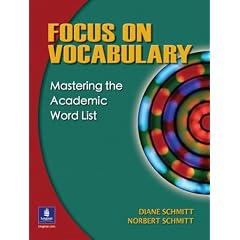
THE ACADEMIC WORD LIST


Today I find out and study some academic word. This is website which I visit and fell it is quite helpfull, so I want to share with everybody if you feel lacking of academic word, let check it out http://www.academicvocabularyexercises.com/id17.htm . According to the website "the Academic Word List (AWL) is divided into 10 sublists of word families. Each of these sublists contains 60 words, except for sublist 10, which contains thirty words. When studying the sublists, one should attempt to learn the various derivations (the verb, noun, adjective and adverb forms + variants) for the word families given.For the exercises given in this website, the word families for each sublist have been further divided into six groups for ease of study, with three separate gap-fill exercises for each group. Ideally, students should work through the three exercises for each group, and should complete all the exercises for the six groups of a given sublist before going on to the next sublist. Some of the exercises will include different derivations for the words given"

I just started to study the first sublist and do some excercise to relate with this.


Sublist 1
analyze, constitut,establish,indicate,occur,role, approach,context,estimate, individual, percent,section,area,contract,evident,interpret,period,sector,assess,create,export,

involve,policy,significant,a,sume,data,factor,issue,principle,similar, authority,define
finance,labour,proceed,source,available,derive,formula,legal,process,specific,benefit
distribute,legislate,require,structure,concept,economy,identify,major,research,theory

consist,environment,income,method,respond,vary

HAPPY LUNAR NEW YEAR


Today I want to introduce with you the biggest traditional festival annually in my country, it is the time we welcome New Year. It is called Tet holiday. Tet offen happen around the end of January or the beginning of February. On this holiday, all of people are off 10 days to work and study. There are many flowers along streets and a lot of flower markets are opened to visit. Everybody is very busy to buy stuffs and a lot of flowers in order to decorate houses but you always see the happiness in the face of them. On these days the members of family will gather together and repair house and also traditional food, fruits such as Banh Trung cake, Vietnamese sausage, spring roll, and very big watermelon (this fruit has many water,it means every business in new year will easy to do and success). This is also the time closed relation, friends can meet together to give gifts, to say happy, prosperous, lucky year, ask each other about healthy, plan business for new year and open party during this period. On the first day of new year we wear traditional custume, it is called Ao Dai, and have to come grandparents' houses or parents house in order to show the respect with them. The elders and children will be receive some money from adults who worked,the money is put in red envelope, it means the lucky for new year. At the most important moment when move from the old year to new year, there are many fireworks in the sky and much noise to welcome new year by difference ways such as the bell of churchs were rung, the sound bin bin of motorcycle and cars, the sound of people shout and laugh a lot.....Everybody seems very happy to wait this moment and they give each other big huges. There are many many thing happen on these days, but all of them seem just happy and love. This year I went to London to study, so I can not go back my country on Tet holiday, I am really homesick becauce this the first Tet I live far away my family. My mon, my dad, and also my friend call phone for me a lots and do not forget to say Happy New Year to me and best wishes, on this time I also want to say with all of them I love, miss them so much and HAPPY NEW YEAR TO ALL.

Tuesday, 20 January 2009

A Good Paragraph


Today in class I study how to write a good paragraph in an academic essay.
It is usually include 3 parts : TOPIC SENTENCE (topic and controlling idea), SUPPORT (reasons, examples, arguements), and a CONCLUSION.
Here is 1 paragraph I try to do following the structure above with the topic related my Globalisation essay now.

In my subject, International economic and trading, it is also affected by globalisation, beside threats there are more benefits from it. According to statistics world trade in produced commodities increase more than 100 times( from $ 95bn to $ 12 trillion). International agreements were unified with lower tariff on export made improving trade among countries ( Schifferes, 2007). When nations open-door with others one led to competition about the quality as well as the price, due to the customers all over the world have more benefits from this, they have more choice to choose various goods with the highest quality and the best price. This is show that developing trade is one of the most important ways in order to improve not only nation’s economy but also benefit’s customer.

( The differrence colours show the difference parts)

Monday, 12 January 2009

Globalisation lecture


Today I had a lecture by Steve and here are some note-taking.
Most serious crisis since Gmat depression (1930) due to Globaisation.
Banks lent to buy house ----> after that bank sells debt to other banks. But if house price fall and interest rate increase people will default and they can not pay back. Banks in turmoil, investment banks collapse, stock market rollercoaster. Sub-prime loans and CDOs effects are main causes, lead to collapse the world finance system, bankruptcy,recession, loss of value, unemployment, falling stock market. Globalisation is blamed which causes of serios crisis. This is one negative side of globalisation beside benefits.

Sunday, 11 January 2009

Diagnostic Language Test and follow-up


Yesterday I completed the diagnostic Language Test . Now I choose 1 area which I found difficult, make mistakes in and find a grammar book to help myself. I want to share with you here if you also make the mistake as me. That which I want to mention about GERUNDS AND INFINITIVES. Here are some verbs are followed by-ing and some are followed by to
- Verbs usually followed by - ing :
admit avoid consider deny enjoy fancy finish imagine keep mind postpone risk stop suggest
- Verbs usually followed by - to :
affort agree arrange decide deservefail forget hope learn manage offer plan promise refuse threate
- Some verbs can be following by -ing or -to....with a differnce of meaning:
- remember I remember doing something = I did it and now I remember this.
You remember doing something after you have done it
ex: -I know I locked the door. I clearly remember looking it(= I locked it, and now I remember this)
- He could remember driving along the road just before the accident, but he couldn't remember the accident itself.
I remembered to do something= I remember that I had to do it, so I did it.
You remember to do something before you do it
ex: - I remember to lock the door, but I forgot to shut the windows.(= I remembered that I had to lock it, and so I locked it)
- Please remember to post the letter(= don't forget to post it)
- regret I regret doing something = I did it and now I'm sorry about it
ex: I now regret saying what I said. I shouldn't have said it.
I regret to say/to tell you/ to inform you = I'm sorry that I have to say
ex: We regret to inform you that we can not offer you the job
The following verbs can be followed by -ing or to :
begin start continue intend bother
ex: you can say:It has started raining or It has started to rain
I have just shared with you some thing I often make mistakes on grammar, I think it is very helpful for you if you also got the mistakes like me :)I have an English advanced in use of Cambridge , in my opinion it very good for you if you want to improve you grammer :)